
Stranger Things: The First Shadow Stuns Broadway, Reviving Franchise Magic on Stage
 Nov, 27 2025
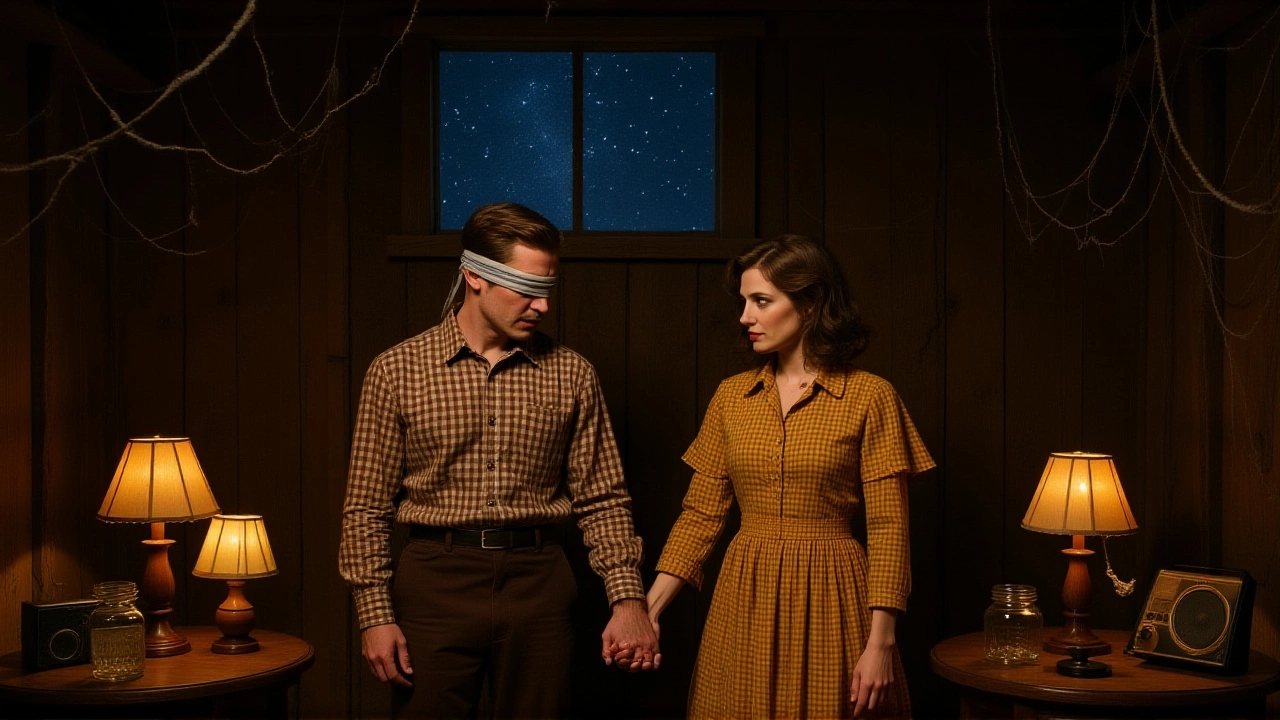
When the lights dimmed at New York City’s Marquis Theatre on April 22, 2025, no one expected a stage play to make the entire audience gasp in unison — but Stranger Things: The First Shadow did exactly that. The Broadway prequel to Netflix’s global phenomenon didn’t just open — it detonated. Critics are calling it the most ambitious theatrical adaptation of a TV series in decades, and fans who’d grown weary of the show’s later seasons are suddenly back in line for tickets. The production, which began previews on March 28, 2025, after a critically lauded West End run, has reignited passion for the Stranger Things universe with a haunting, visually staggering tale set in 1963 Hawkins, Indiana — long before Eleven, Demogorgons, or even the Upside Down took shape.
A Prequel That Feels Like Home
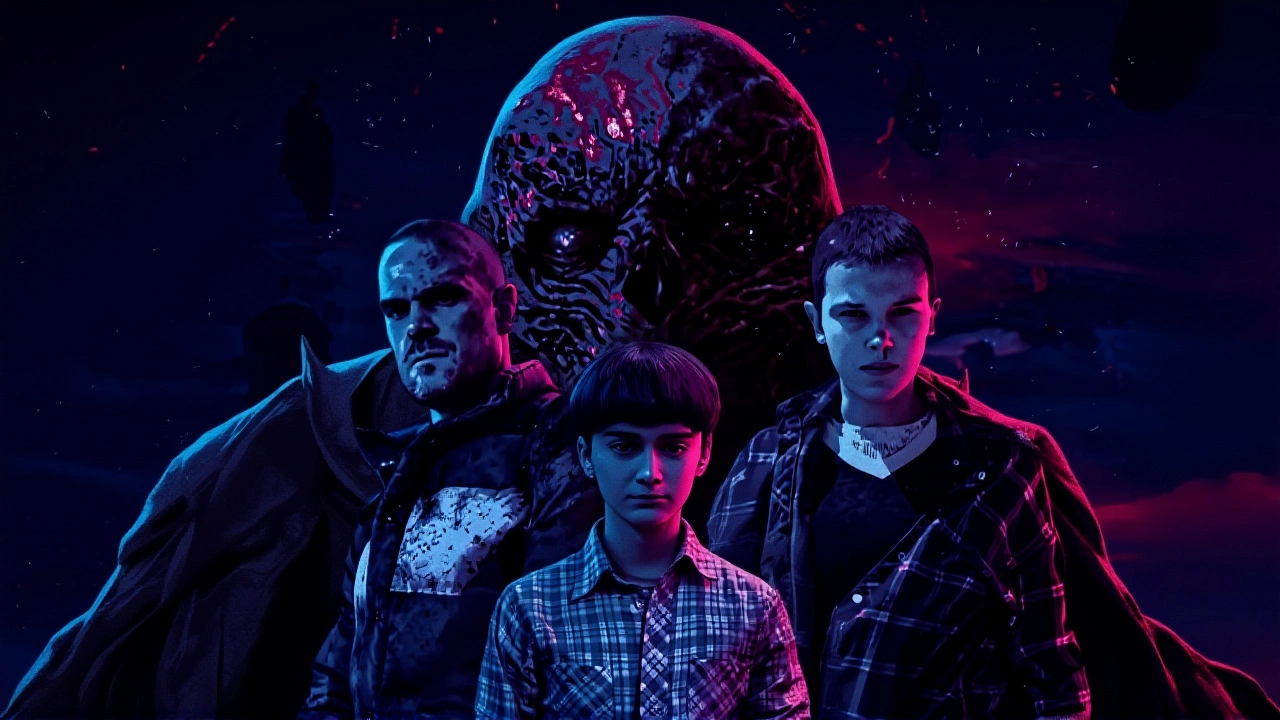
The First Shadow isn’t a retelling. It’s a revelation. Written by Kate Trefry from an original story conceived by the Duffer Brothers (Matt and Ross Duffer), Jack Thorne, and Trefry, the play dives into the origins of Hawkins’ darkest secrets. We meet a young Jim Hopper (played by Burke Swanson), fresh off a failed car repair and wrestling with the draft, while Joyce Maldonado dreams of escaping town before her life gets swallowed by its quiet decay. And then there’s Henry Creel — portrayed with chilling precision by Louis McCartney, reprising his role from London. He’s not a monster yet. He’s just a boy with too much power and no one to stop him.The script doesn’t rely on nostalgia. It builds it. Every flickering fluorescent light, every echo of a radio signal cutting in and out, every whisper of a child’s voice from another dimension — it all feels earned. As Swanson put it: "You can’t understand Season 5 without seeing this. It’s the DNA of everything that comes after."
Technical Mastery That Breaks the Fourth Wall
What truly separates The First Shadow from every other stage production this decade is its design. Miriam Buether and 59 Productions — the same team behind Harry Potter and the Cursed Child and To Kill a Mockingbird — didn’t just build sets. They built portals. The stage transforms in real time: a school hallway becomes a tunnel of flickering static; a basement wall dissolves into the Upside Down’s pulsing vines. The lighting, by 59 Productions, doesn’t illuminate — it haunts. Sound design by 59 Productions uses frequencies that vibrate in your chest, not just your ears. It’s not special effects. It’s sensory manipulation.The production earned the 2025 Tony Award for Best Scenic Design of a Play, plus a Special Tony for Illusions and Technical Effects — the first time such an award was given for a non-musical. The Drama Desk Awards and Outer Critics Circle Awards followed suit. McCartney’s Tony nomination for Best Leading Actor wasn’t a surprise — his performance as Creel is the kind that lingers long after the curtain falls.
Why This Matters Beyond the Stage
For years, fans whispered that Stranger Things had lost its way. Season 4 was a triumph, but Season 5? Uncertain. Then came The First Shadow. Suddenly, people remembered why they fell in love with Hawkins in the first place: the loneliness, the dread, the quiet heroism of ordinary people facing the inexplicable. The play doesn’t just expand the lore — it deepens it. We see Hopper’s trauma before the loss of his son. We hear Joyce’s voice before she became the woman who screamed into a Christmas light string. And we meet Henry Creel not as a villain, but as a boy who chose power over connection.The production is a co-venture between Netflix and the team behind The Book of Mormon and Mean Girls — a sign that streaming giants are no longer just content distributors, but cultural architects. The Duffer Brothers’ new production company, Upside Down Pictures, is already developing The Boroughs and a live-action Death Note, suggesting this isn’t a one-off. This is the beginning of a new era: TV universes as live theater.
What’s Next?
As of November 27, 2025, The First Shadow continues its Broadway run at the Marquis Theatre with no announced closing date. Tickets are sold out through January 2026. A West End revival is rumored, with Lauren O'Neil — who took over as Virginia Creel in London — potentially reprising her role for a U.S. tour. Meanwhile, Netflix has quietly confirmed that the play’s events will be referenced in Season 5, with showrunners hinting at "a direct narrative throughline" between the stage production and the final episodes.For once, a spinoff didn’t feel like a cash grab. It felt like a love letter. And fans? They’re crying in the lobby after curtain call.
Frequently Asked Questions
How does 'The First Shadow' connect to Stranger Things Season 5?
The play directly establishes Henry Creel’s transformation into Vecna, showing his early experiments with psychic manipulation and his connection to Hawkins’ underground lab — a location referenced but never shown on screen. Key dialogue between Creel and a young Hopper mirrors lines spoken by Vecna in Season 4, suggesting a cyclical pattern of trauma. The Duffer Brothers confirmed in a recent interview that two scenes from the play are mirrored in Season 5’s final episode, making the stage version essential viewing for full context.
Is Louis McCartney’s portrayal of Henry Creel different from the TV version?
Yes. On TV, Henry Creel is a shadowy figure revealed in flashbacks. McCartney’s stage version is the emotional core of the play — we watch him grow from a lonely, gifted boy to a chillingly calm manipulator. His performance is quieter, more internalized, and far more tragic. Unlike the TV version, the play shows him bonding with Joyce and Hopper before turning, making his eventual descent more devastating.
Why did Netflix invest in a Broadway play instead of another season?
Netflix recognized that the franchise’s core audience — now in their late 20s and 30s — craved immersive, tactile experiences beyond screens. The play’s success proves that nostalgia alone isn’t enough; audiences want emotional depth and innovation. The $2.3 million production cost was offset by premium ticket pricing ($250+ for orchestra seats) and merchandising, turning the play into a profitable, brand-renewing experiment — not just a promotional stunt.
Are there plans for more Stranger Things stage productions?
Yes. Netflix and the Duffer Brothers have already greenlit a second stage play, tentatively titled Stranger Things: The Mind Flayer, which will explore the origins of the Upside Down and the creatures that inhabit it. Early concept art shows a rotating, multi-level stage designed to simulate the dimension’s shifting geography — an even bigger technical challenge than The First Shadow. No casting or dates have been announced, but the creative team is already in rehearsals for a 2027 debut.
Can you watch the play without seeing the TV series?
Absolutely. While fans will catch deeper references, the play stands alone as a chilling period drama about isolation, power, and the cost of silence. The script introduces every necessary character and concept organically. Many first-time viewers left the theater saying they’d now binge the entire series — not because they were confused, but because they were moved.
What makes the technical effects in this play so groundbreaking?
Unlike CGI-heavy films, the play uses practical illusions: projection-mapped walls that breathe, hidden trapdoors that make actors vanish mid-sentence, and sound frequencies that trigger real physical sensations — like a chill crawling up your spine. One moment, a child’s drawing on the wall comes to life with moving shadows, and the next, the entire stage tilts 15 degrees as if reality itself is unraveling. Critics say it’s the most innovative use of live theater technology since The Curious Incident of the Dog in the Night-Time.